Louis XIII cognac represents the absolute pinnacle of luxury spirits—but is this legendary $4,000+ bottle truly worth its astronomical price? As one of the world’s most expensive and revered cognacs, Rémy Martin’s Louis XIII commands attention from serious collectors and cognac enthusiasts worldwide.
Here’s the thing: Louis XIII isn’t just expensive cognac—it’s a century-old blend of eaux-de-vie aged between 40 and 100 years in Limousin oak barrels. Each hand-blown Baccarat crystal decanter contains liquid history from the Grande Champagne region, representing the life’s work of four generations of cellar masters. But many collectors wonder: are you paying for prestige, or genuine quality?
This question becomes even more pressing when you consider there are exceptional XO cognacs at $300-500 that offer 80% of the experience for 15% of the price. So what justifies that extra $3,500? Is it the century-old eaux-de-vie, the Baccarat artistry, or simply the exclusivity?
In this comprehensive cognac review, we’ll explore Louis XIII’s complex tasting profile, examine its heritage craftsmanship, and provide an honest assessment of its value proposition. You’ll discover what makes this luxury spirit unique, how it compares to other ultra-premium cognacs like Hennessy Paradis, and whether it deserves a place in your collection as a drink, investment, or both.
We’ll also reveal insider tips on how to properly experience this extraordinary French cognac, share cocktail recipes worthy of the liquid (yes, really), and help you decide if this is a once-in-a-lifetime splurge or a pass. Let’s dive into the world’s most prestigious cognac.
ID Card: Louis XIII Cognac at a Glance
- Brand: Rémy Martin
- Classification: Hors d’Age (Beyond XO)
- Aged: 40-100 years (blend of century-old eaux-de-vie)
- Controlled Appellation: Grande Champagne (100% finest terroir)
- Alcohol by Volume (ABV): 40%
- Bottle Size: 700ml
- Cask Type: Limousin oak, aged Tierçon barrels
- Still Type: Traditional Charentais copper pot stills
- Price Range: $3,500-$4,500 (varies by market)
- Availability: Limited production, exclusive luxury retailers only
Fun fact
Each bottle contains a blend from different eaux-de-vie and represents the life work of four generations of cellar masters!
The legendary baccarat decanter: art meets spirit
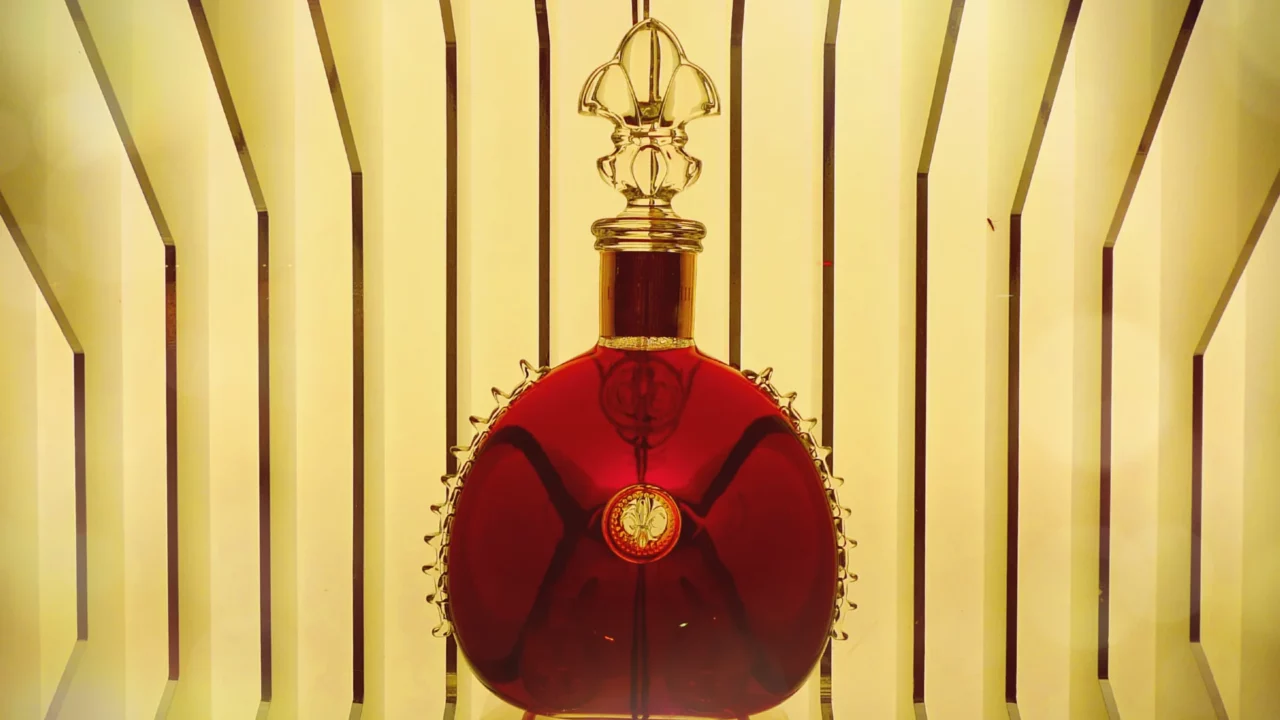
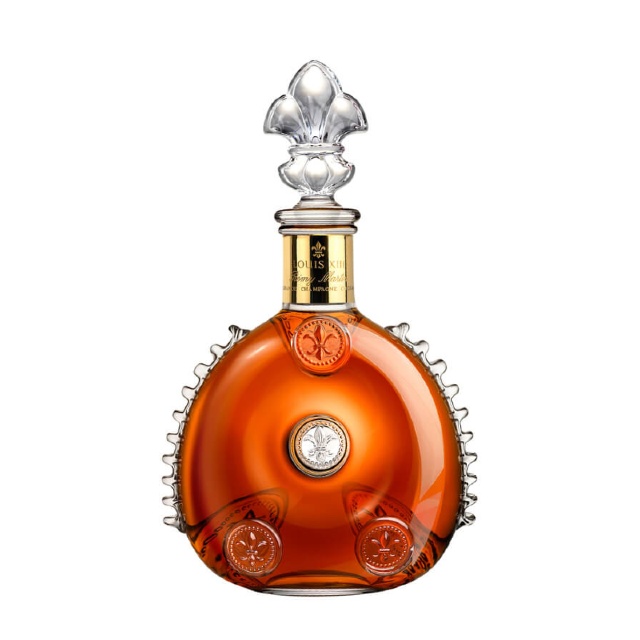
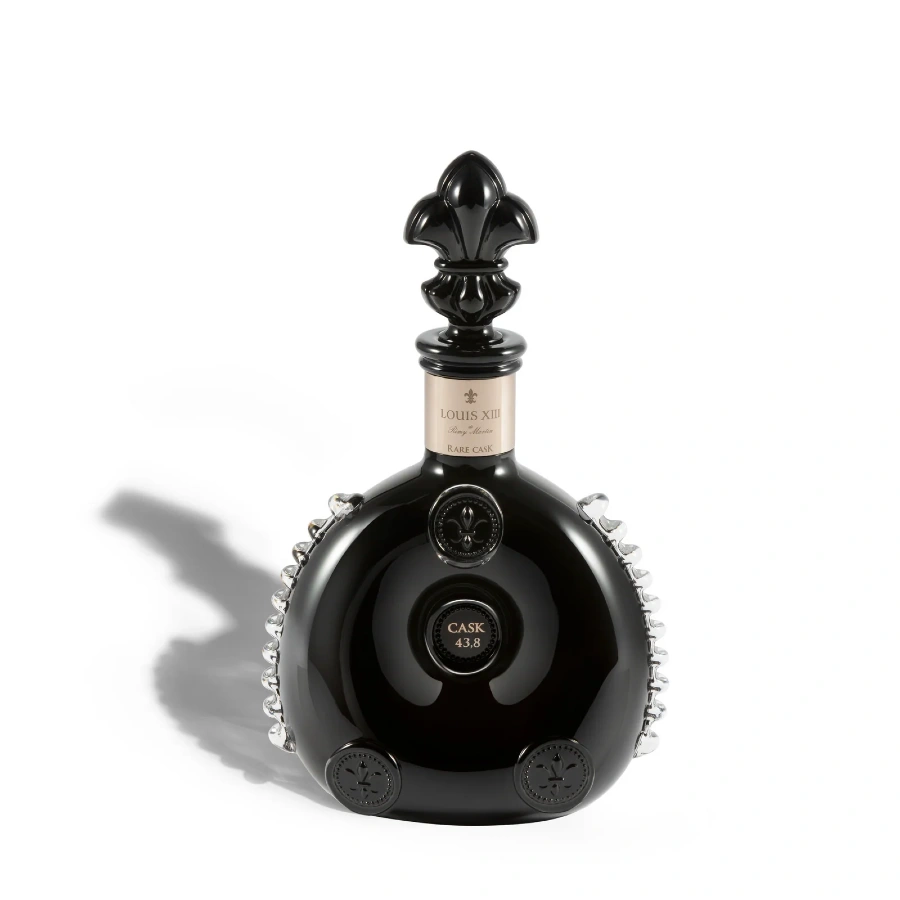
The Louis XIII decanter isn’t just packaging—it’s a masterpiece of crystal artistry that rivals museum pieces and justifies a portion of that hefty price tag.
Craftsmanship & Design
Handcrafted by Baccarat crystal artisans, each decanter takes a full day to create and features the distinctive fleur-de-lis neck design. The weight alone—nearly three pounds when full—announces its presence before you even taste what’s inside.
The crystal is so pure that it rings like a bell when tapped. The crystal catches light like a prism, creating rainbow reflections that dance across its faceted surface. The stopper, also Baccarat crystal, fits with satisfying precision, a testament to centuries of craftsmanship.
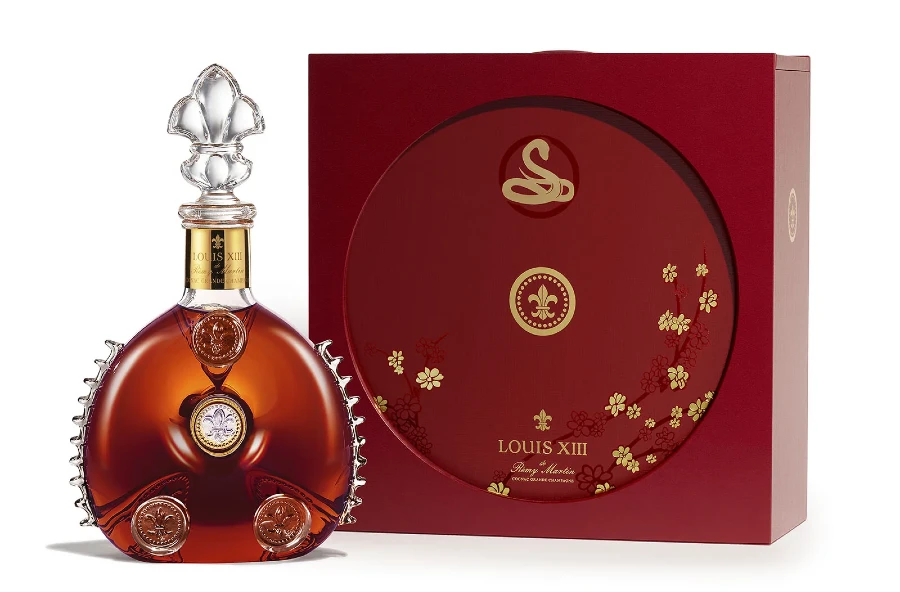
The presentation comes in a luxurious gift box with red velvet interior and magnetic closures that whisper rather than click shut, complete with serving glasses worthy of the liquid they’ll hold.
Historical inspiration
The iconic decanter shape has a fascinating origin story. In 1850, Paul-Émile Rémy Martin discovered a 16th-century metal flask on a battlefield near Jarnac—the very town where the House was founded. Captivated by its striking Renaissance design and regal fleur-de-lis medallions, he envisioned creating a crystal decanter in its image to house the finest Grande Champagne eaux-de-vie. Thus, Louis XIII was born in 1874.
Every bottle since has honored that battlefield discovery, making each decanter not just packaging, but a tribute to French royal heritage and the serendipitous moment that defined luxury cognac forever.
Investment value
The Baccarat crystal decanter can actually outlast the cognac inside by centuries. Rémy Martin offers a refill service that cleans and refills your empty decanter with fresh Louis XIII—though at current prices, you’re still looking at around $2,500 for the privilege. Some collectors have turned vintage decanters into display pieces, using them as conversation starters long after the last drop has been savored.
Heritage: four generations of mastery
Understanding Louis XIII requires understanding the extraordinary timeline behind each bottle. This isn’t cognac made in years—it’s measured in lifetimes.
The multi-generational legacy
Since 1874, each generation of Cellar Master has selected the oldest and finest eaux-de-vie from Rémy Martin‘s cellars specifically for Louis XIII. The profound challenge? No Cellar Master will ever taste the final blend for which many of these eaux-de-vie are destined.
This creates a sacred duty: each Cellar Master must not only craft today’s Louis XIII, but also carefully train their successor to continue the vision. When you open a bottle, you’re experiencing decisions made by Cellar Masters who began their work decades—sometimes a century—before you were born.
Current Cellar Master Baptiste Loiseau is already setting aside the finest eaux-de-vie as a legacy for his successors in the coming century. He joined as an apprentice to the previous Cellar Master, learning the art of selecting eaux-de-vie that won’t reach their peak for generations.
The Tierçon: time’s perfect vessel
Louis XIII ages exclusively in 100- to 150-year-old tierçons—thin-walled French oak casks designed initially for transport by horse-drawn cart (three casks at a time, hence the name). These rare vessels, no longer produced, were crafted from Limousin oak chosen for its perfect tannins and porosity.
The tierçon’s unique form creates ideal conditions for the continuous exchange between spirit and air essential to century-long aging. Each year, the Cellar Master personally inspects and samples every cask, judging evolution with an expert nose and selecting certain eaux-de-vie to blend with others. Over decades, hundreds of eaux-de-vie marry in this fashion, creating the unparalleled complexity of Louis XIII.
Grande Champagne: the only terroir worthy
Louis XIII is composed 100% of Grande Champagne, the most prestigious cru in Cognac, and the only terroir capable of producing eaux-de-vie that improve for a century.
Why Grande Champagne is exceptional:
The region’s chalky limestone soil (called “champagne” for chalk country, not the sparkling wine) provides:
- Exceptional finesse and floral aromatics
- Natural mineral elegance that defines the Louis XIII character
- Extraordinary aging potential unmatched by other crus
- The foundation for eaux-de-vie that develops complexity over 40-100 years
This limestone composition, considered ideal for cognac production, imparts a distinctive terroir signature that becomes more refined with each decade of aging. Only Grande Champagne eaux-de-vie possess the structural integrity and aromatic potential to withstand—and benefit from—the extreme aging that defines Louis XIII.
The Blend: 1200 eaux-de-vie in harmony
Each decanter of Louis XIII represents a blend of up to 1200 different eaux-de-vie, each aged between 40 and 100 years. This isn’t simply mixing old cognacs—it’s a symphonic composition where the Cellar Master balances hundreds of individual notes to create a unified whole that transcends its parts.
The art lies in understanding how each eaux-de-vie will evolve and interact with others, creating layers of complexity that unfold over minutes—and even hours—in your glass.
Complete tasting experience
Opening a bottle of Louis XIII cognac is like unlocking a time capsule. This isn’t just any luxury cognac tasting—it’s an experience that unfolds over hours, revealing new layers with every sip.
The Color
Pour this into your glass and you’re greeted by deep mahogany—rich amber with flashes of burnished copper and gold that seem to glow from within. The color is notably darker than most XO cognacs, a testament to decades spent in century-old Limousin oak tierçons.
The viscosity is immediately apparent: thick, syrupy legs form slowly and cascade down the glass walls like liquid silk. It’s the kind of color that whispers “expensive” before you even bring it to your nose, signaling the rich, creamy mouthfeel to come.
The Nose: A symphony in stages
The first nose is almost overwhelming in its complexity—this isn’t a cognac you rush. Let it breathe for a full 5-10 minutes, and you’ll discover why people pay $4,000+ for this experience. The aroma evolution is like watching a flower bloom in slow motion, with the alcohol remarkably subdued despite its 40% ABV.
First Nosing (0-5 minutes – Static, no swirl):
Capture the most volatile and delicate scents that define Louis XIII’s floral elegance:
- Florals: Narcissus, jasmine, violet, iris, dried roses, orange blossom
- Fruits (Fresh): Peach, melon, litchi, clementine
- Delicate Notes: Honey beeswax, chamomile, white pepper, marzipan
Second Nosing (5-15 minutes – After gentle swirl):
Heavier aromatic compounds emerge as the cognac opens:
- Fruits (Dried/Concentrated): Fig jam, prune, Medjool date, dried mango, pineapple, papaya, passion fruit
- Spices: Cinnamon bark, nutmeg, cardamom, allspice, curry, saffron, ginger
- Wood & Earth: Sandalwood, cedar chest, eucalyptus, tobacco leaf, leather, old Porto
- Complexity Layers: Dark chocolate, cocoa, vanilla bean, almond, cigar box, truffle
The nose alone justifies spending serious time with this bottle. It’s like opening a Victorian spice merchant’s cabinet, merged with a rare perfumery—some tasters detect maritime notes and exotic spices, while others find layers of tropical fruit, a testament to the complexity achieved through centuries of aging and the masterful blend of 1,200 eaux-de-vie.
The Palate: Poised intensity & silken evolution
The entry is velvet-smooth, coating your palate with pristine balance—no burn, just pure refinement. The mouthfeel is substantial yet never heavy, exhibiting what tasters describe as “briny intensity” that somehow remains silky and sophisticated.
Attack (First Impression):
- Silky, warming entry with no alcohol heat
- Concentrated fig and date sweetness
- Bright citrus peel (orange, mandarin) provides balance
- Immediate complexity that signals what’s to come
Mid-Palate (Development – First 5 Minutes):
The cognac reveals its extraordinary depth through distinct flavor waves:
- Fruit Core: Honeyed figs, baked pear, dried apricot, melon sweetness
- Spice Layer: Christmas spice cake, cinnamon, nutmeg, lingering sophisticated spice
- Chocolate & Nuts: Dark chocolate truffle, almond, cocoa richness
- Oak Influence: Vanilla bean, toasted wood notes providing structure without dominating
- Grande Champagne Signature: That distinctive mineral elegance and floral persistence
Texture Evolution (5-15 Minutes):
As it evolves in the glass, Louis XIII gains texture and silkiness. The mouthfeel shifts from silky to slightly oily, carrying flavors deep into your palate with remarkable persistence. Fruitier notes emerge—mandarin, tropical mango, pineapple, papaya—adding an unexpected layer that showcases the cognac’s ability to reveal new dimensions continually.
What sets Louis XIII apart from other luxury cognacs is the seamless integration. Where some premium spirits show individual components fighting for attention, this presents as a unified symphony that’s greater than its 1,200 parts—a testament to Baptiste Loiseau’s blending mastery.
The Finish: Legendary persistence
The finish is extraordinarily long and lingering—we’re talking 20-30 minutes of continuous evolution, with some fortunate tasters reporting subtle flavor echoes returning hours later.
Finish Timeline:
- 0-10 minutes: Concentrated fruit intensity (grapes, soft fleshy fruits), warming spices, and that persistent floral character
- 10-20 minutes: Transition through leather, tobacco, sweet oaky spice, and honeyed complexity
- 20-30+ minutes: Whisper of vanilla, delicate grape notes, sandalwood, and that signature Grande Champagne minerality
- Beyond: Subtle returns throughout the evening—like a beautiful memory that refuses to fade
The finish’s lingering sophistication makes you understand why people become cognac connoisseurs. This is what separates good from legendary—a finish so long and complex that it becomes its own tasting experience, evolving long after the liquid has left your palate.
How to properly enjoy Louis XIII
At this price point, there’s really only one way to drink Louis XIII properly. With a bottle this precious, every detail of service matters.
Essential serving guidelines
Temperature: Room temperature is ideal, perhaps slightly below (65-68°F / 18-20°C). Never chill it—you’ll mute those incredible aromatics that you’re paying $4,000 to experience.
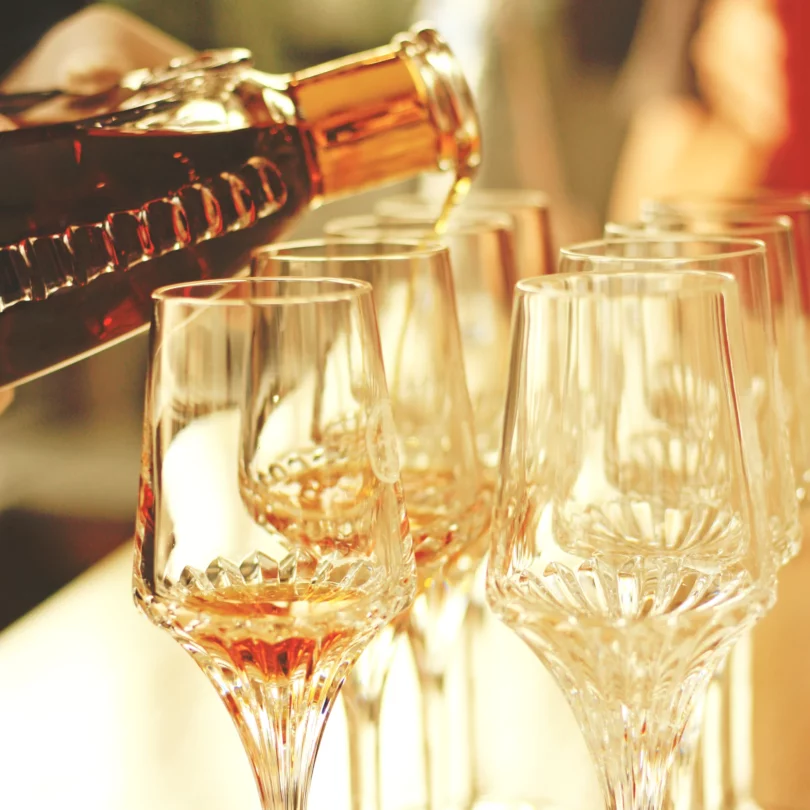
Glassware: Use a proper cognac tulip glass, never a balloon snifter. Those giant balloon glasses you see in movies? Skip them—they’re all show and dissipate the precious aromatics you’re paying handsomely to experience. The narrow opening concentrates those precious aromas while the wider bowl allows for proper swirling.
Portion: Pour 25-30ml (1-1.5 oz) maximum. This isn’t a cocktail base—it’s meant for contemplative sipping. A single drop of room-temperature water can open up additional aromatics, but ice is absolutely forbidden.
Breathing Time: Let it sit for at least 10 minutes before your first sip. Patience rewards you exponentially.
Food pairings: Luxury meets luxury
Think luxury all the way—Louis XIII pairs beautifully with:
Optimal Pairings:
- Dark chocolate (80-85% cacao minimum)—the bitter notes create perfect contrast
- Aged Comté cheese (24+ months)—nutty complexity matches the cognac
- Fresh figs with honey—echoes the dried fruit notes
- Cuban cigars—classic pairing for the ultimate luxury trifecta
Avoid:
- Anything with strong vinegar or citrus (competes with cognac)
- Spicy foods (overwhelm the subtleties)
- Light, delicate flavors (gets dominated)
Occasions: When to open this bottle
This is celebration cognac—milestone birthdays, major business deals, or those quiet moments when you want to taste true craftsmanship. Think “once-in-a-lifetime” rather than “Tuesday evening.”
Perfect Moments:
- 50th+ birthday celebrations
- Major career achievements
- Wedding anniversaries (25th+)
- Closing a significant business deal
- Welcoming a child/grandchild
- Quiet reflection on life’s journey
Louis XIII vs other ultra-premium cognacs
How does Louis XIII stack up against its peers in the $1,000-$5,000 category?
Direct competitors comparison
| Cognac | Price | Age | Terroir | Character | Best For |
|---|---|---|---|---|---|
| Louis XIII | $4,000 | 40-100yr | 100% GC | Floral, refined, infinite complexity | Ultimate luxury, investment |
| Hennessy Paradis | $1,800 | 30-130yr | Multi-cru | Rich, powerful, spicy | Balance of luxury & accessibility |
| Hennessy Richard | $6,500 | 40-200yr | Multi-cru | Bold, intense, structured | Power & prestige |
| Rémy XO Excellence | $250 | 10-37yr | Multi-cru | Smooth, approachable | Entry to ultra-premium |
| Camus XO Elegance | $250 | 20-40yr | Multi-cru | Elegant, floral, light | Best value in XO category |
The value perspective
Here’s the uncomfortable truth: there are exceptional XO cognacs at $300-500 that offer 80% of the experience for 15% of the price. The question becomes whether that final 20% of complexity and the prestige factor are worth the additional $3,500.
What You’re Really Paying For:
- 50% – The liquid (century-old eaux-de-vie, Grande Champagne exclusivity)
- 20% – Baccarat crystal craftsmanship
- 15% – Brand prestige & heritage
- 15% – Exclusivity & collectibility
Cocktail recipes worth the splurge
Let’s be honest—making cocktails with Louis XIII feels like using a Monet to wrap fish or a Stradivarius as a baseball bat. But if you’re feeling adventurous (and wealthy), here are four cocktails that honor rather than mask this extraordinary spirit.
The Century Sazerac
Backstory: A tribute to New Orleans’ famous cocktail, but elevated to match Louis XIII’s pedigree. The absinthe/pastis rinse and single sugar cube create a classic foundation that lets the cognac’s century-old character shine through.
Ingredients:
- 60ml Louis XIII cognac
- 1 sugar cube
- 2 dashes Peychaud’s bitters
- Absinthe/Pastis rinse
- Lemon peel for garnish
Method:
- Rinse a chilled rocks glass with absinthe/pastis, discard excess
- In a mixing glass, muddle sugar cube with bitters
- Add cognac and ice, stir until well chilled
- Strain into the prepared rocks glass (no ice)
- Express lemon peel oils over drink, discard peel
Pro Tip: Serve this at formal temperature—the lack of ice allows every nuance of the cognac to shine.
- The Classics
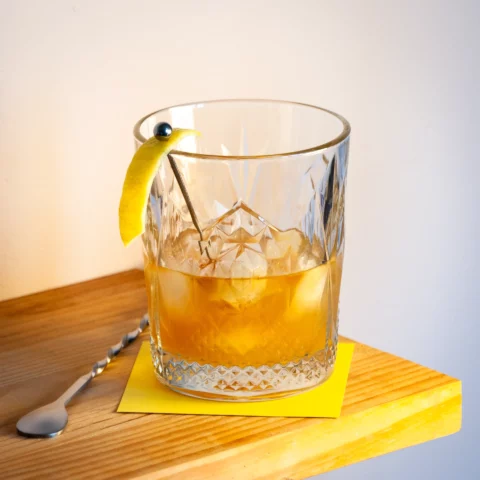
Sazerac is an excellent cocktail mixing cognac with cane sugar syrup, bitter, and pastis/absinthe. Serve it in a chilled Old Fashioned glass and enjoy!
The Royal Sidecar
Backstory: This elevated version of the classic Sidecar was created for a private tasting at the Rémy Martin estate. Instead of overwhelming the cognac, the minimal additions highlight its fruit and spice notes while adding just enough brightness to create something new. It’s extravagance with purpose.
Ingredients:
- 50ml Louis XIII cognac
- 15ml Grand Marnier Cuvée du Centenaire
- 10ml fresh Meyer lemon juice
- 2ml rich simple syrup (2:1 sugar to water)
- Candied orange peel garnish
Method:
- Chill a coupe glass with ice water, then discard
- Add all ingredients to mixing glass with ice
- Stir gently for 20 seconds (don’t bruise the cognac)
- Double strain into chilled coupe
- Express orange oils over drink and garnish with candied peel
Pro Tip: Use the absolute minimum citrus—you want brightness, not tartness that competes with the cognac’s complexity.
- The Classics
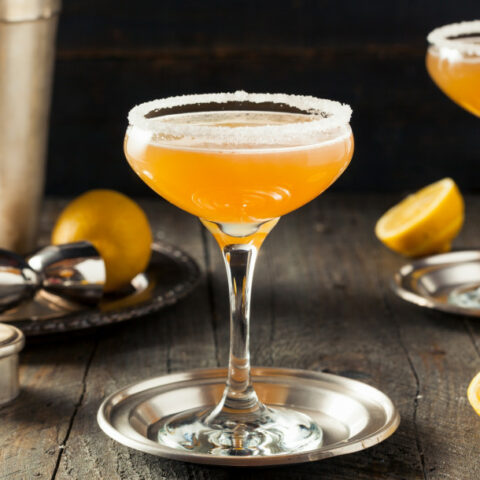
The sidecar cocktail is an amazing classic cocktail, made with cognac, Cointreau, and lemon juice. Enjoy !
The $4,000 Question: Is it worth it?
Here’s the uncomfortable truth about Louis XIII cognac: you’re not just buying liquid—you’re buying history, craftsmanship, exclusivity, and a century of artistry in every drop.
The Honest Value Assessment
From a Pure Taste Standpoint:
Louis XIII delivers an experience that’s genuinely unique in the spirits world. The complexity, the finish, the sheer artistry of the blend—these elements justify the premium for serious cognac enthusiasts. You cannot replicate this experience with younger, cheaper bottles. The century-old eaux-de-vie bring dimensions that don’t exist in 10, 20, or even 40-year cognacs.
The Reality Check:
However, let’s be realistic: there are exceptional Out of ages cognacs at $300-500 that offer 80% of the experience for 15% of the price. The question becomes whether that final 20% of complexity, the Baccarat artistry, and the prestige factor are worth the additional $3,500.
Who should buy Louis XIII?
✅ Buy it if:
- You’re a serious collector building an elite spirits library
- This represents a once-in-a-lifetime celebration worth memorializing
- You appreciate the pinnacle of any craft and have the means to acquire it
- You’re buying it as an investment (see next section)
- You want to experience the absolute best cognac can be
❌ Skip it if:
- You’re looking for daily sipping cognac (try Rémy XO instead)
- You want to explore premium spirits on a budget ($500 gets you amazing XO)
- You’re buying for the name/flex factor alone (there are better ways to spend $4k)
- You can’t truly appreciate the nuances (no judgment, taste develops over time)
The investment perspective
From a luxury cognac investment standpoint, Louis XIII has shown remarkable value retention and appreciation. Vintage releases from the 1990s now sell for $8,000-$12,000 at auction. The combination of limited production, increasing global demand (especially from Asia), and Rémy Martin’s impeccable reputation creates favorable conditions for appreciation.
But: Buy it because you love it first, investment second. A cognac you’ll never open isn’t fulfilling its destiny.
Investment & collectibility analysis
For those considering Louis XIII as more than just a drink:
Historical value appreciation
Market data:
- 1990s bottles: Originally $1,500 → Now $8,000-12,000 (5-8x)
- 2000s bottles: Originally $2,000 → Now $4,500-6,000 (2-3x)
- Special editions: Often 10-15x appreciation within 10 years
Appreciation factors:
- Limited annual production
- Rising Asian market demand (China, Singapore)
- Rémy Martin’s consistent quality & reputation
- Baccarat decanter collectibility alone
- Inflation-resistant luxury asset
Storage & maintenance
Optimal conditions:
- Upright storage (never on side—cork deterioration)
- Temperature: 15-20°C constant
- Humidity: 60-70%
- Dark location (no UV exposure)
- Original box preservation (increases value 20-30%)
Resale considerations
Best platforms:
- Specialist auction houses (Christie’s, Sotheby’s)
- High-end spirits retailers (buy-back programs)
- Private collectors’ markets
- Online: Whisky Auctioneer, K&L Wine
Documentation matters:
- Keep the original box and documentation
- Provenance proof (receipt, photos)
- Proper storage records
- Numbered medallion verification
Where to buy & pricing guide
Authorized retailers
In-Store (Recommended for first purchase):
- Harrods (London)
- Galeries Lafayette (Paris)
- Sherry-Lehmann (New York)
- K&L Wine Merchants (California)
- Dubai Duty Free
Online (Convenience):
- ReserveBar.com (US)
- Master of Malt (UK)
- The Whisky Exchange (UK)
- Caskers.com (US)
Price variations by market
| Market | Typical Price | Notes |
|---|---|---|
| France | €3,200-3,800 | Best pricing (source country) |
| USA | $3,500-4,500 | Varies by state taxes |
| UK | £3,000-3,500 | VAT included |
| Asia | $4,500-6,000 | Premium for import/demand |
| Duty-Free | $3,200-3,800 | Save ~15-20% on taxes |
Pro Tip: If you’re traveling through France or duty-free, the savings can be substantial ($500-1,000).
Authenticity verification
🚩 Red Flags:
- Price significantly below market ($2,000 or less = suspicious)
- No numbered medallion
- Unclear provenance
- Damaged or missing original box
- Seller with no track record
✅ Authentication:
- Rémy Martin offers a verification service
- Check the serial number with the manufacturer
- Buy only from authorized dealers
- Inspect Baccarat crystal quality (clarity, weight, ring tone)
Frequently Asked Questions
Unlike wine, cognac doesn’t spoil once opened, but it will slowly oxidize. Louis XIII maintains peak quality for 2-3 years after opening if stored properly (upright, cool, dark place, tight seal). After 3 years, you’ll notice subtle changes—still drinkable, but not quite the same experience.
No. Cognac stops aging once bottled—the liquid doesn’t change over time like wine. A bottle from 1980 contains the same liquid as the day it was sealed. However, vintage bottles may command higher prices due to scarcity and collectibility, not improved taste.
Rémy Martin doesn’t publish exact figures, but estimates suggest 15,000-20,000 decanters globally per year. This limited production contributes to its exclusivity and value retention.
Louis XIII:
- 40-100 year eaux-de-vie blend
- 100% Grande Champagne
- 1,200 different eaux-de-vie
- Baccarat crystal decanter
- $4,000+
Rémy Martin XO:
- 10-37 year eaux-de-vie blend
- Multi-cru blend (Grande & Petite Champagne)
- Simpler complexity
- Standard glass bottle
- $200-250
The difference is exponential in complexity, rarity, and craftsmanship.
“Better” is subjective, but here’s the comparison:
Louis XIII:
- More floral, refined, elegant
- 100% Grande Champagne purity
- Longer finish (20-30 min)
- Higher price ($4,000 vs $1,200)
- Baccarat presentation
Hennessy Paradis:
- Richer, more powerful, spicy
- Multi-cru complexity
- Excellent value proposition
- More accessible luxury
Think: Louis XIII = orchestra symphony; Paradis = powerful rock concert. Different, both excellent.
Yes, but with caveats:
- Historical appreciation: 5-8x over 20-30 years
- Requires proper storage (cost)
- Market timing matters
- Special editions appreciate faster
- Buy because you love it first, investment second
The Ceremony:
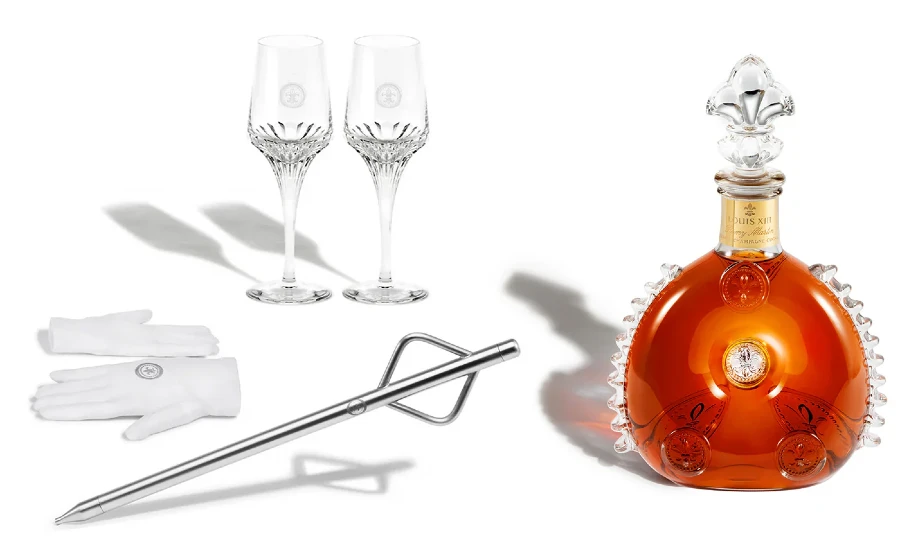
- Present the bottle (let them admire Baccarat)
- Pour small amounts (25ml max per person)
- Use proper tulip glasses
- Allow 10 min breathing time
- Guide first nosing (don’t rush)
- Encourage slow sipping
- Discuss evolution of flavors
Make it an experience, not just a drink. The ritual enhances appreciation.
Grande Champagne (chalky soil region, not the sparkling wine) produces:
- Most elegant, refined eaux-de-vie
- Exceptional aging potential (100+ years)
- Floral, delicate aromatics
- Longest finish
- Highest prestige in Cognac
Only Grande Champagne can produce cognac worthy of century-long aging. Louis XIII is 100% Grande Champagne.
Final Verdict & Recommendations
So, is Louis XIII cognac worth the investment? The answer depends entirely on who you are and what you value.
For collectors & cognac connoisseurs
Absolutely worth it. This is the cognac equivalent of owning a Picasso—equal parts luxury, art, and investment. You’re not just buying a drink; you’re buying time itself, distilled and aged to perfection over a century. Every sip represents generations of expertise and craftsmanship that borders on the mystical.
If you appreciate the pinnacle of any craft and have the means to acquire it, Louis XIII delivers an experience that justifies its premium positioning. The complexity is genuine, the finish is legendary, and the heritage is unmatched.
For enthusiasts building their collection
Experience it first, then decide. Before committing $4,000, try Louis XIII at a high-end hotel bar or specialist tasting ($100-200 per pour). This investment lets you determine if the difference from $300 XO cognacs justifies the 10x price for your palate.
If you fall in love, buy the bottle. If you appreciate it but don’t feel transformed, invest that $4,000 in 10-15 exceptional XO and VSOP cognacs that together offer more exploration and enjoyment.
For those curious about luxury cognac
Start smaller and work your way up. The journey matters more than the destination. Build your palate with:
- Rémy Martin VSOP ($60) – Understand the house style
- Rémy Martin XO ($200) – Experience serious age and complexity
- Rémy Martin XO Excellence ($250) – Bridge to ultra-premium
- Louis XIII bar pour ($100-200) – Test before investing
- Louis XIII bottle ($4,000) – When you’re ready for the pinnacle
This progression ensures you can truly appreciate what makes Louis XIII special rather than just buying the most expensive option.
The bottom line
Louis XIII represents everything compelling about artisan spirits at their absolute peak: distinctive vision, generational expertise, and commitment to quality over quantity. While it may not have the marketing muscle of more accessible brands, what it offers is arguably more valuable—authenticity, unmatched character, and cognac that reflects a century of French heritage rather than focus group preferences.
Ready to experience liquid history? Pour yourself a dram of Louis XIII, take your time with it, and discover why this luxury cognac has earned its legendary status. Whether you’re buying to collect, invest, or savor, you’re acquiring more than spirits—you’re owning a piece of cognac history.
Santé! 🥃